



IND-Enabling Studies: A Practical Guide for Sponsors
Every new drug reaches its first patient through the same gate: an Investigational New Drug application. Before that gate opens, a sponsor has to show the FDA that the molecule is reasonably safe to give to people and that it can be made consistently. The body of work that proves both is known as the IND-enabling package. It is usually the most expensive and time-critical stretch of preclinical development, and it is where many programs stumble.
Key Takeaways
- An IND lets a sponsor ship an unapproved drug to clinical investigators. The sponsor must then wait 30 calendar days before starting a trial.
- The package covers three areas: animal pharmacology and toxicology, manufacturing (CMC) and clinical protocols.
- ICH M3(R2) sets the core nonclinical expectations; biologics follow ICH S6(R1) and advanced cancer drugs follow ICH S9.
- Charles River puts most small-molecule packages at $2–7 million and 18–36 months from candidate selection to submission.
- FDA is moving away from routine animal testing, starting with monoclonal antibodies, under the FDA Modernization Act 2.0.
- A Type B pre-IND meeting is the cheapest insurance against a clinical hold.
What an IND Is and Why It Matters
30 days
FDA wait after IND submission
60 days
Target to schedule a Type B meeting
$2–7M
Typical small-molecule IND package
18–36
Months from candidate to IND
Federal law bars shipping an unapproved drug across state lines. The IND, governed by 21 CFR Part 312, is the exemption that allows it. According to the FDA, the application must cover animal pharmacology and toxicology, manufacturing information, and clinical protocols with investigator details. Once it is submitted, the sponsor must wait 30 calendar days. If FDA raises no hold in that window, the trial can begin.
That 30-day clock is short. FDA reviewers are not judging efficacy. They are asking one question: will subjects face unreasonable and significant risk? Everything in the IND-enabling package exists to answer that question with data.
Planning usually starts long before the clock does. Charles River estimates that most IND programs take 18 to 36 months from candidate selection to submission, and that small-molecule IND-enabling packages typically cost $2 to 7 million. Biologics and advanced modalities often exceed that range. There is no FDA fee to file an IND.
The Nonclinical Package
The anchor guideline is ICH M3(R2), finalized in 2009. It ties the scope of animal work to the length and design of the planned clinical trial. Most pivotal safety studies must run under Good Laboratory Practice (GLP), which FDA codifies in 21 CFR Part 58.
- Repeat-dose toxicology. Studies in two species, one rodent and one non-rodent. Their duration should match or exceed the planned clinical dosing period.
- Safety pharmacology. The ICH S7A core battery looks at cardiovascular, respiratory and central nervous system function. ICH S7B adds assessment of QT prolongation risk.
- Genotoxicity. Under ICH M3(R2), a gene mutation assay generally supports single-dose trials. Multiple-dose trials also need an assay for chromosomal damage in a mammalian system, following ICH S2(R1).
- DMPK and toxicokinetics. In vitro metabolism, plasma protein binding and exposure data from the toxicology studies. These link animal findings to human dose selection.
- Pharmacology. Primary pharmacodynamic studies that show the mechanism of action and support the starting dose.
Biologics and Oncology
Biologics follow ICH S6(R1), as M3(R2) itself directs. The key word is relevance. Toxicology must run in a species where the antibody or protein binds its target, which often means non-human primates. Standard genotoxicity batteries usually do not apply to large proteins.
Drugs for advanced cancer follow ICH S9. Because patients have limited options, S9 accepts a leaner and faster package than M3(R2). Sponsors should still justify each omission in writing.
Chemistry, Manufacturing and Controls
CMC is often treated as a box to tick. It should not be. FDA expects the IND to describe the drug’s composition, its manufacturer, its stability and the controls that ensure consistent batches (FDA). In practice that means four building blocks:
- Drug substance. Structure or sequence, manufacturing process, impurity profile and release specifications.
- Drug product. Formulation, container closure, and the tests used to release each lot.
- Stability. Data showing the material will stay within specification for the length of the trial.
- Clinical supply under GMP. Phase 1 material must be made under appropriate controls, and the toxicology lot should be representative of it.
That last point causes more trouble than most teams expect. If the GLP toxicology lot has a different impurity profile from the clinical lot, the safety data may not support the human dose. Lock the process early, or bridge the two lots with analytical comparability data. Methods used to release clinical material need to be fit for purpose; our post on compendial analytical method verification covers the basics.
“The toxicology lot and the clinical lot should tell the same story. If they do not, the safety data stops protecting you.”
The Pre-IND Meeting
A pre-IND meeting is a Type B meeting under FDA’s formal meetings framework. According to ProPharma Group, FDA responds to the request within 21 days and aims to hold the meeting within 60 days of receiving it. The briefing package is due at least 30 days before the meeting, and official minutes follow within 30 days after it.
Use the meeting to test your riskiest assumptions. Good questions include species selection, whether a study can be skipped, the starting dose rationale, and whether the CMC plan is adequate for Phase 1. Agreement in the minutes carries weight when the IND is reviewed.
Clinical Holds and How to Avoid Them
If FDA finds a problem, it can place the IND on clinical hold under 21 CFR 312.42. For Phase 1 studies, the grounds include unreasonable and significant risk to subjects, unqualified investigators, a misleading or incomplete investigator’s brochure, and insufficient information to assess risk. FDA must send a written explanation within 30 days of imposing the hold. Once the sponsor files a complete response, FDA reviews it within 30 calendar days.
Holds are common. An FDA review of IND applications received at CDER between June 2016 and June 2021 identified 358 holds across commercial and research INDs, and set out to classify the CMC deficiencies behind them. A 2024 conference analysis of publicly disclosed holds from January 2020 to January 2024 counted 94 holds: 48 linked to clinical data, 27 to manufacturing and 19 to preclinical data (CGTLive, 2024). Holds in that sample lasted an average of 6.2 months.
Regulatory Note: FDA Is Reducing Animal Testing
The FDA Modernization Act 2.0, passed in December 2022, allows sponsors to support an IND with new approach methodologies rather than animal data alone (RAPS, 2026).
On April 10, 2025, FDA announced a plan to reduce, refine or replace animal testing, starting with monoclonal antibodies. It published a roadmap for new approach methodologies (NAMs) and set a goal of making animal studies the exception within three to five years (Holland & Knight, 2025).
In December 2025, FDA issued draft guidance stating that nonrodent studies longer than three months are generally unnecessary for monospecific antibodies when backed by a weight-of-evidence assessment (Holland & Knight, 2025). A March 2026 draft guidance set out general principles for using NAMs in drug development (RAPS, 2026).
Working with CROs and CDMOs
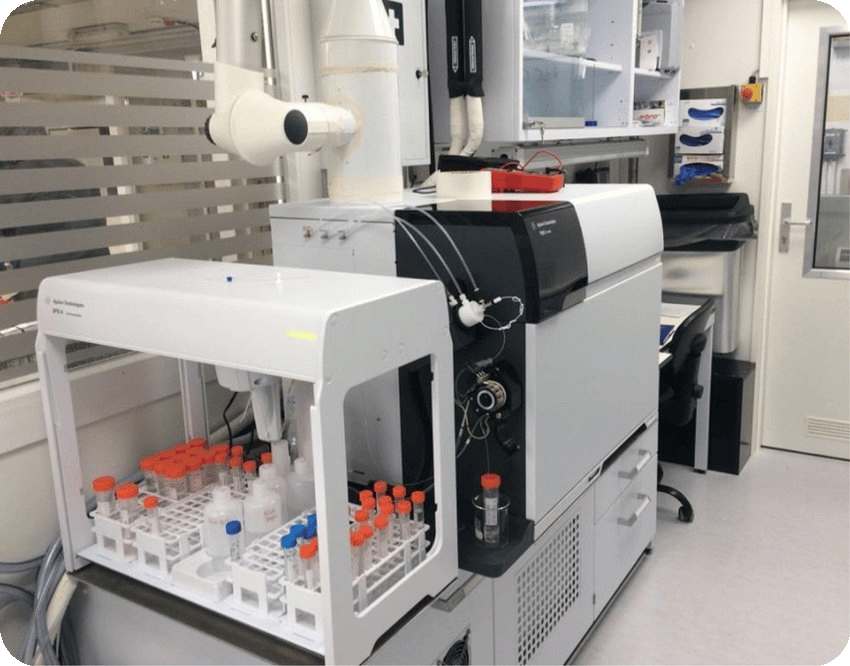
Few emerging biotechs run IND-enabling work in-house. Toxicology, safety pharmacology and bioanalysis usually go to a contract research organization (CRO). Process development and GMP clinical supply usually go to a contract development and manufacturing organization (CDMO). This model is efficient, but it splits accountability across several vendors.
- Sequence the critical path. Toxicology cannot start until a representative lot of drug substance exists. Book CDMO slots early.
- Audit before you sign. Confirm GLP compliance at the CRO and GMP status at the CDMO. Check data formats, including SEND for nonclinical datasets.
- Own the integration. Someone on the sponsor side must make sure the toxicology lot, the clinical lot and the protocol all line up.
- Plan for surprises. An unexpected finding in a GLP study can add months. Build float into the timeline.
What This Means for Emerging Biotech Sponsors
The IND is less a single submission than the end of a long, coordinated program. The best packages are designed backwards from the first clinical protocol. They pick the right species, match study length to dosing, and lock CMC early enough that the toxicology lot reflects the clinical one.
The rules are also shifting. FDA’s push toward NAMs gives antibody developers a real chance to shorten timelines and cut animal use. It also creates new questions about what evidence FDA will accept. Sponsors should raise these questions at the pre-IND meeting, not after a hold.
Terraforme Biosciences helps sponsors plan IND-enabling programs, select and manage CROs and CDMOs, prepare pre-IND briefing packages and close CMC gaps before submission. Learn more about our regulatory guidance services.
Sources
- U.S. FDA. Investigational New Drug (IND) Application. FDA.gov
- U.S. FDA. IND Application Procedures: Clinical Hold. FDA.gov
- ICH. M3(R2) Non-Clinical Safety Studies for the Conduct of Human Clinical Trials and Marketing Authorization. EMA, 2009
- Charles River. Your Guide to IND-Enabling Study Needs. Charles River Laboratories
- ProPharma Group. Formal FDA Meetings for Sponsors or Applicants of PDUFA Products. 2024
- U.S. FDA. Analysis of Pharmaceutical Quality Deficiencies Responsible for Clinical Holds of Investigational New Drug Applications. FDA.gov
- CGTLive. Cell and Gene Therapy Trials and Clinical Holds (ASGCT 2024 analysis). 2024
- Holland & Knight. FDA Announces Plan to Phase Out Animal Testing Requirement. April 2025
- Holland & Knight. FDA Publishes New Draft Guidance on Reducing Animal Testing. December 2025
- RAPS. FDA Drafts Guidance on Animal Testing Alternatives. Regulatory Focus, March 2026
At a glance
30 days
FDA wait after IND submission
60 days
Target to schedule a Type B meeting
$2–7M
Typical small-molecule IND package
18–36
Months from candidate to IND
Planning an IND program?
Related Insights
Ready to Build Your IND-Enabling Package?
Terraforme Biosciences helps sponsors plan nonclinical and CMC work, manage CROs and CDMOs, and prepare for pre-IND meetings.

