


Viral Safety of Biologics: Adventitious Agent Testing and Viral Clearance
In June 2009, Genzyme shut down its Allston Landing plant in Massachusetts after a viral contamination of its bioreactors. Patients with Gaucher and Fabry disease faced rationed treatment for months. The virus was not known to harm humans, but that did not matter: the plant had to stop. Viral contamination is rare in biologics manufacturing, yet when it happens it is costly, disruptive and very public. This guide explains how the industry keeps viruses out of products, using the framework set by ICH Q5A(R2).
Key Takeaways
- Contaminations are rare but real. A CAACB study collected 18 viral contamination events in cell culture from 20 companies, covering 1985 to 2018.
- Raw materials are the main risk for CHO processes. A raw material or media component was identified or suspected in 11 of 12 CHO events.
- ICH Q5A(R2) uses three complementary layers: source control and testing, testing of the unprocessed bulk, and validated viral clearance.
- Next generation sequencing (NGS) is now accepted as a replacement for in vivo assays and can supplement or replace in vitro culture assays.
- Cell therapies cannot rely on clearance, so their viral safety depends almost entirely on prevention and rapid detection.
What Real Contamination Events Teach Us
18
Viral contaminations reported to CAACB
11 of 12
CHO events linked to raw materials
28 days
Q5A(R2) in vitro assay observation
≥4 log10
Reduction for an effective clearance step
The best data on viral contamination comes from the Consortium on Adventitious Agent Contamination in Biomanufacturing (CAACB), run from MIT. In a paper in Nature Biotechnology in April 2020, the group reported 18 contamination events shared by nine of 20 participating companies, dating from 1985 (MIT News, 2020). Twelve occurred in Chinese hamster ovary (CHO) cells. The rest occurred in human or primate cells.
The viruses in CHO processes included minute virus of mice (MVM), Vesivirus 2117, Cache Valley virus and blue tongue virus. MVM accounted for five of the CHO events. Serum was implicated in seven CHO events, including four involving Vesivirus 2117. In human and primate cell lines, the likely sources were operators or the cell line itself (Barone et al., 2020).
Two findings stand out. First, testing raw materials directly is unreliable: in eight of the 11 events where a raw material was suspected, that material tested negative. Viruses can be present at low levels and unevenly spread through a lot. Second, the standard in vitro virus assay missed contamination in four of 14 contaminated harvests. Most events were spotted because the cells looked unhealthy. The good news is that no contaminated material was released for human use, and downstream purification reduced virus below the detection limit wherever it was measured.
Case Example: Genzyme Allston Landing, 2009
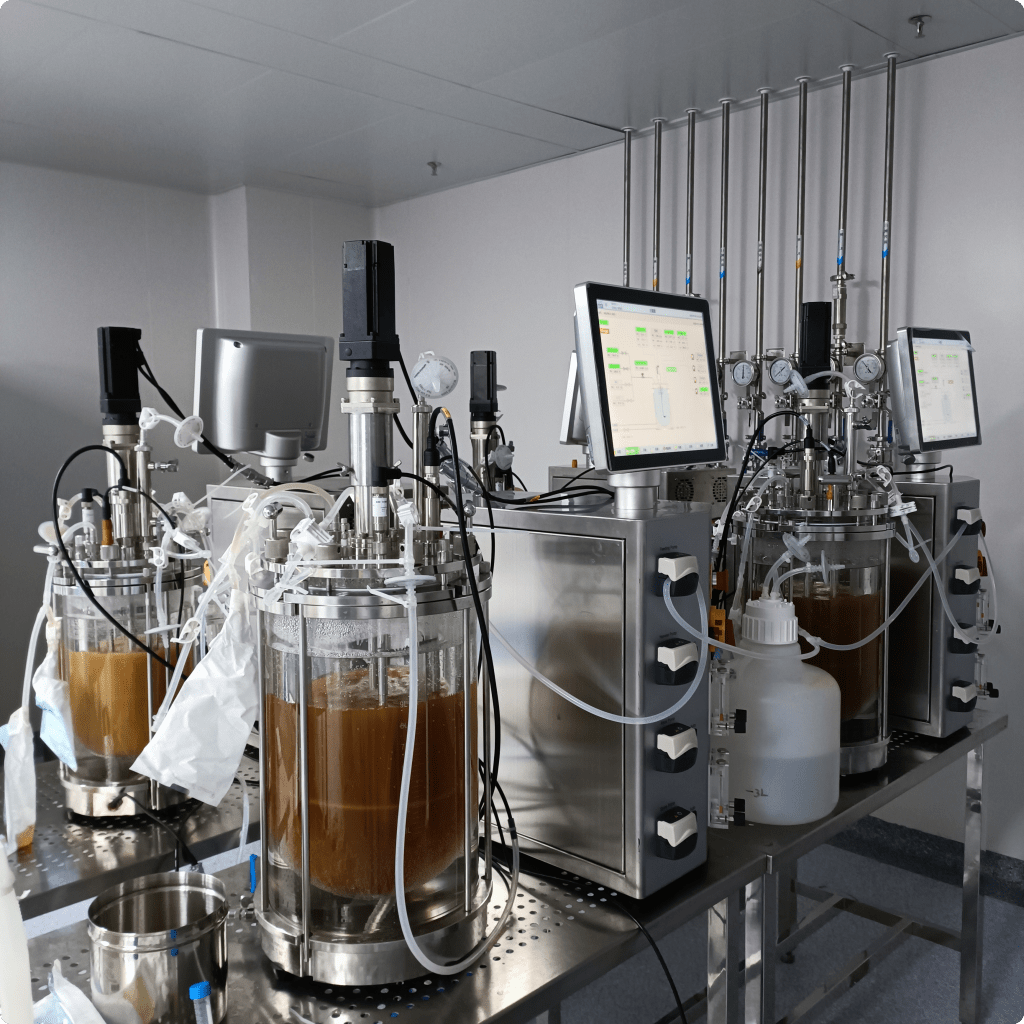
Genzyme halted production at Allston Landing in June 2009 after detecting Vesivirus 2117, a calicivirus, which required the bioreactors to be sanitized. The virus could reduce enzyme yield but was not known to cause human disease. The shutdown caused shortages of Cerezyme (imiglucerase) and Fabrazyme (agalsidase beta), and the EMA issued updated recommendations restricting Cerezyme to the patients most in need (EMA, 2009).
The lesson: a contamination that never reaches patients can still become a supply crisis.
ICH Q5A(R2): Three Complementary Approaches
ICH Q5A(R2) reached Step 4 on 1 November 2023 and took effect in the EU on 14 June 2024 (ICH Q5A(R2), 2023). Its core idea has not changed since the original version: no single test can prove a product is virus-free, so safety comes from layers that cover each other’s gaps. The revision expands scope to viral vectors and viral vector-derived products, adds guidance on continuous manufacturing and prior knowledge, and formally brings in molecular methods.
1. Source Control: Cell Banks and Raw Materials
The master cell bank is screened extensively for endogenous and adventitious viruses. Each working cell bank is tested, and cells at the limit of in vitro cell age are tested once. For a well-characterized CHO line, retrovirus-like particles are expected and accepted, because downstream clearance is shown to remove far more than one dose could contain. Good cell line documentation underpins all of this. Our guide to cell line development covers the steps that lead to a bankable clone.
Raw materials deserve as much attention. The CAACB authors recommend reducing animal-derived components and treating media with heat, UV light or nanofiltration (MIT News, 2020).
2. Testing the Unprocessed Bulk
The unprocessed bulk, typically the harvest before purification, is tested routinely for adventitious viruses. In the in vitro assay, indicator cells are observed for 28 days with a sub-passage at two weeks, or 14 days with justification. The biggest change in R2 is that non-targeted NGS can replace in vivo assays and supplement or replace in vitro culture assays, without a head-to-head comparison. That reduces animal use and can shorten timelines, but regulators expect a full validation package and early discussion. Unprocessed bulk testing usually runs alongside mycoplasma testing.
“A clean test result tells you what you did not find. Clearance tells you what you could remove if you missed something.”
3. Viral Clearance Validation
Clearance studies show that the purification process can remove or inactivate viruses. Because you cannot spike live virus into a GMP plant, the work is done in qualified scale-down models that must match the commercial process in yield, purity and chromatographic behaviour. Known amounts of virus are spiked in, and the reduction across each step is reported as a log10 reduction value (LRV).
A step is considered effective when it shows a reproducible reduction of about 4 log10 or more in at least two independent studies. Steps giving 1 to 3 log10 still contribute, and reductions under 1 log10 are treated as negligible. The guideline recommends at least two orthogonal steps with different modes of action, one of which should be effective against non-enveloped viruses.
- Low pH hold. Inactivates enveloped viruses. Often placed after Protein A elution in antibody processes.
- Solvent/detergent treatment. Disrupts viral lipid envelopes. Ineffective against non-enveloped viruses.
- Virus filtration. Removes viruses by size. Parvoviruses are the worst-case model for small virus-retentive filters.
- Chromatography. Anion exchange in particular can remove both enveloped and non-enveloped viruses under suitable conditions.
Published data for a conventional antibody process show what this looks like in practice: LRVs of at least 5.5 for X-MuLV across low pH, about 5 to 6 for both X-MuLV and MVM across anion exchange, and at least 4.9 to 5.8 across nanofiltration (Syngene, 2023).
| Model Virus | Genome / Envelope | Size (nm) | Why It Is Used |
|---|---|---|---|
| Murine leukaemia virus (X-MuLV) | RNA / enveloped | 80–110 | Specific model for rodent cell retroviruses |
| Pseudorabies virus (PRV) | DNA / enveloped | 120–200 | Large enveloped DNA virus |
| Reovirus 3 (Reo3) | RNA / non-enveloped | 60–80 | Non-enveloped RNA virus |
| Minute virus of mice (MVM) | DNA / non-enveloped | 18–24 | Small, resistant worst case |
Q5A(R2) also lets companies use prior knowledge, including in-house platform data, to reduce product-specific studies when processes are comparable. Published reduction factors can support but not replace in-house data (BioProcess International, 2023).
Cell and Gene Therapies: The Weakest Link
Cell therapies are outside the scope of Q5A(R2), though its principles may apply. Viral vectors are in scope where they are amenable to clearance. The problem is that most clearance steps destroy live cells or viral vectors. For autologous products, there is currently no technology to clear virus from living cells, so viral safety depends almost entirely on preventing contamination. Tests often cannot finish before manufacturing starts, and open manipulations raise the risk of operator and environmental contamination (Barone et al., 2020).
The practical response is closed systems, fewer human- and animal-derived materials, and rapid, broad-spectrum detection such as high-throughput sequencing. Our overview of types of cell therapies explains why autologous and allogeneic products face different risk profiles.
What This Means for Biologics Developers and Manufacturers
- Treat raw materials as the front line. Audit suppliers, minimize animal-derived inputs and consider media treatment rather than relying on lot testing.
- Plan for NGS early. If you want to drop in vivo assays, build the validation package and talk to regulators before your IND or BLA.
- Qualify your scale-down models. A clearance claim is only as good as the model behind it.
- Build orthogonal clearance into process design. Adding a virus filter late is expensive. Design it in from the start.
- Have a contamination response plan. Know how you would detect, contain, investigate and restart before you need to.
Terraforme Biosciences helps biologics and cell and gene therapy companies build viral safety strategies, prepare clearance packages and align their programs with ICH Q5A(R2). Learn more about our regulatory guidance services.
The Bottom Line
Viral safety is a system, not a test. Control what goes in, look hard at what comes out of the bioreactor, and prove that purification would catch what testing missed. The CAACB data show this layered approach works, and Q5A(R2) gives developers more modern tools to apply it.
Sources
- Barone PW et al. Viral Contamination in Biologic Manufacture and Implications for Emerging Therapies. Nature Biotechnology, 2020
- MIT News. Study Analyzes Viral Contamination in Drug Manufacturing Plants, 2020
- ICH. Q5A(R2) Viral Safety Evaluation of Biotechnology Products, Step 5. EMA, 2023
- EMA. Supply Shortage of Cerezyme: Updated Treatment Recommendations Required, 2009
- Perez-Caballero D et al. Viral Safety for Biotechnology Products Including Viral Vectors. BioProcess International, 2023
- Sandle T. Improving Viral Safety: Highlights of ICH Q5A(R2), USP and Ph. Eur. Recommendations. Bioprocess Online, 2024
- Syngene. Viral Clearance from Conventional to Unconventional Process Steps in Biologics, 2023
At a glance
18
Viral contaminations reported to CAACB
11 of 12
CHO events linked to raw materials
28 days
Q5A(R2) in vitro assay observation
≥4 log10
Reduction for an effective clearance step
Building a viral safety strategy?
Related Insights

Need Help With Viral Safety and Clearance?
Terraforme Biosciences helps you design viral safety strategies and clearance packages that meet ICH Q5A(R2) expectations.

