


Why “It’s a Compendial Method” Isn’t Enough: The Case for Microbiology Method Suitability
Every microbiology lab has heard some version of this from a client: “The method is already in the USP. Why am I paying thousands of dollars to verify it?” It’s a fair question, and the answer is simple: a compendial method has been shown to work. It hasn’t been shown to work on your product.
This guide explains what method suitability studies do, why they matter even when a published method exists, and why they are worth paying for outside pharma too, in cosmetics, personal care, dietary supplements and natural health products (NHPs).
Key Takeaways
- Compendial methods are validated in general. Method suitability confirms they work in the presence of your specific formulation.
- Preservatives, essential oils, botanical extracts, antimicrobial actives, alcohols and extreme pH can all hide contamination if they aren’t neutralized.
- A suitability study verifies the neutralization step: test organisms added to the product must be recovered at levels comparable to a control.
- Without it, a “pass” may only mean the test couldn’t detect a failure.
- For probiotics the problem runs the other way: interfering ingredients can understate viable counts, so a good batch fails specification.
- A study typically costs up to a few thousand dollars, which is small next to a recall or a rejected batch.
What a Method Suitability Study Is
≤100 CFU
Typical challenge inoculum
50–200%
Acceptable recovery vs control (USP <61>)
~30%
Products needing extra optimization in one 2025 study
84%+
Recovery once neutralization was optimized
Microbiological tests rely on a basic assumption: if microorganisms are present in a sample, the method will grow and detect them. The product itself can break that assumption.
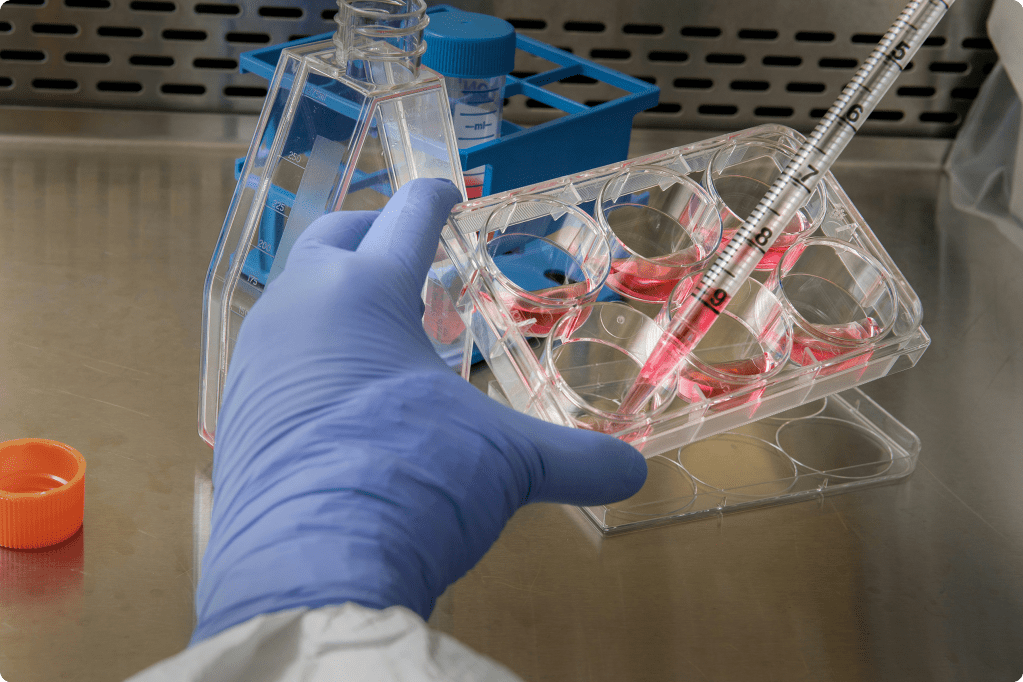
A method suitability study (also called method verification, or a neutralization or recovery study) tests that assumption directly. Low numbers of known challenge organisms, typically no more than 100 CFU, are added to the product under the actual test conditions, and recovery is compared with a control without product. In USP <61>, recovery must fall within a factor of two of the control. If the product suppresses growth, the method is adjusted until recovery is acceptable. Common adjustments include:
- More dilution, sometimes combined with warming or pH adjustment.
- Chemical neutralizers, such as polysorbate 80 (Tween 80) or lecithin.
- Membrane filtration with repeated rinses.
- A different medium or incubation condition.
The study also confirms that the neutralizer itself isn’t toxic to the organisms. A neutralizer that kills the microbes defeats its own purpose.
“A passing result only means something if the test could have failed.”
Why a Published Method Isn’t Enough
Pharmacopeial methods such as USP <61>, <62> and <71>, the supplement chapters USP <2021> and <2022>, and the ISO cosmetic microbiology standards are validated for general use. They can’t anticipate every formulation, which is why the standards themselves require suitability to be shown in the presence of the product before routine testing.
Many formulations contain ingredients that suppress microbial growth, sometimes by design:
| Ingredient type | Examples | Evidence |
|---|---|---|
| Preservatives | Parabens, sodium benzoate | Needed dilution, Tween 80 or lecithin to neutralize in pharmaceutical method suitability testing (Eldemerdash et al., 2025) |
| Essential oils | Tea tree, oregano (carvacrol), thyme (thymol), clove | Broad antibacterial and antifungal activity, largely through cell membrane damage (Wińska et al., 2019) |
| Botanical extracts | Goldenseal, barberry, Coptis (berberine) | Berberine shows broad-spectrum antibacterial activity (Yang et al., 2025) |
| Antimicrobial actives | Salicylic acid, menthol, zinc oxide, antifungals such as ketoconazole | Salicylic acid, menthol and antifungals required multi-step neutralization (Eldemerdash et al., 2025); zinc ions inhibit bacterial growth (Reda et al., 2024) |
| Alcohols and quaternary compounds | Ethanol, polyquaternium-10 | Required neutralization before microbes could be recovered (Eldemerdash et al., 2025) |
| Physical properties | pH below 3 or above 10, water activity of 0.75 or lower | Recognized as hostile to microbial growth in cosmetic risk assessment (da Silva et al., 2025; ISO 29621) |
Real-world evidence
A 2025 study in BMC Microbiology reviewed method suitability testing for 133 non-sterile pharmaceutical products at one manufacturer. Forty of them, roughly 30%, needed more than one optimization step before standard organisms could be recovered, and every product with antimicrobial ingredients needed multiple steps. Once optimized, recovery was at least 84% across all methods.
The study also notes that when a product cannot be neutralized at all, USP allows the lab to assume the inhibited organism is not present in the product. That conclusion has to be justified and documented, which is impossible without a suitability study.
The False Negative Problem
In microbiology, the most dangerous result is not a failure. It is a pass that should have been a failure. If a preservative or botanical carries over into the test, contaminants such as Pseudomonas aeruginosa or Burkholderia cepacia complex can be present in a product yet fail to grow on the plate.
These are exactly the organisms that matter. Pseudomonas is the contaminant most frequently identified in FDA cosmetic recalls for microbial contamination (da Silva et al., 2025), and both organisms are known for surviving in preserved, water-based products. A product released on the strength of a false negative can lead to a recall, with the direct costs of retrieval, destruction and investigation, regulatory scrutiny, and lasting damage to relationships with retailers and consumers.
The Probiotic Problem: When Microbes Are the Active Ingredient
For probiotics, the issue runs the other way. The goal is not only to show that unwanted microbes are absent, but that enough of the intended ones are alive, usually by plate count against a label claim in CFU.
Multi-ingredient supplements often pair probiotics with botanical extracts, minerals such as zinc, or “immune support” ingredients like berberine or essential oils. As the table shows, many of these are antimicrobial, and on a plate they can suppress the probiotic as easily as a contaminant. Without a suitability study, a lab may undercount viable organisms, producing an out-of-specification result, an investigation, a rejected lot or relabelling, even though the product was viable all along. A suitability study confirms that the count reflects the probiotic, not interference from the rest of the formula.
Is It Actually Required? Pharma vs Other Industries
- Pharmaceuticals. Yes. Method suitability is built into USP <61>, <62> and <71> and the equivalent Ph. Eur. and JP chapters.
- Dietary supplements (US). The cGMP rule (21 CFR 111) requires test methods that are appropriate and scientifically valid, and USP <2021> and <2022> include suitability testing. A method never shown to work on your product is hard to defend as scientifically valid in an FDA inspection.
- Natural health products (Canada). Health Canada expects finished products to meet microbial limits using appropriate, generally pharmacopeial, methods, and those methods include suitability.
- Cosmetics and personal care. This is where the ambiguity is greatest. The ISO cosmetic microbiology standards (for example ISO 21149, 16212, 22717, 22718, 21150, 18416 and 18415) include neutralization checks as part of the method, and as FDA develops cosmetic GMP requirements under the Modernization of Cosmetics Regulation Act (MoCRA), expectations around valid testing are likely to tighten.
In practice, if a test result is used to release product or support a label claim, you need to be able to show the method works on that product, whether or not a regulation spells it out.
The Cost Question
A method suitability study typically costs up to a few thousand dollars per product or method, depending on the number of tests, organisms and the neutralization work needed. Clients sometimes push back, especially on lower-margin cosmetics and supplements. Compare that with the alternatives:
- Recalls of contaminated product that tested clean.
- Rejected batches and investigations from false probiotic count failures.
- Inspection findings for using methods that are not scientifically valid.
- Reputational damage with retailers and consumers.
A suitability study is usually a one-time cost per formulation, repeated only when the formula, process or method changes. To keep costs down:
- Group similar formulations (same base and preservative system) where it is scientifically justified.
- Run the study early, during development or tech transfer, rather than after a questionable result.
- Use the same lab for suitability and routine testing, so the method is set up once.
- Re-verify only when formulation changes affect antimicrobial properties.
What This Means for Your Business
Method suitability is what gives a microbiology result its meaning. Without it, a clean result may simply mean the test couldn’t see a problem, and a failed probiotic count may be wrong. For pharma it is non-negotiable. For cosmetics, supplements and NHPs, it is the cheapest way to make sure your test results actually protect your customers and your brand.
Terraforme Biosciences helps manufacturers and testing labs build defensible quality systems, including microbiology test strategies, method suitability programs and lab qualification. Learn more about our quality management services.
Sources
- Eldemerdash A, Ewaisha R, Alseqely M, Shehat MG. Optimizing neutralization strategies for microbial testing of non-sterile pharmaceutical finished products with challenging method suitability. BMC Microbiology, 2025;25:748
- Wińska K, et al. Essential oils as antimicrobial agents: myth or real alternative? Molecules, 2019;24(11):2130
- Yang X, et al. Berberine and its nanoformulations and extracts: potential strategies and future perspectives against multi-drug resistant bacterial infections. Frontiers in Microbiology, 2025;16:1643409
- Reda AT, Park JY, Park YT. Zinc oxide-based nanomaterials for microbiostatic activities: a review. Journal of Functional Biomaterials, 2024
- da Silva JD, Silva FAM, Rodrigues CF. Microbial contamination in cosmetic products. Cosmetics, 2025;12(5):198
- USP General Chapters <61>, <62>, <71>, <1227>, <2021> and <2022>; 21 CFR Part 111; ISO 21149; ISO 29621
At a glance
≤100 CFU
Typical challenge inoculum
50–200%
Acceptable recovery vs control (USP <61>)
~30%
Products needing extra optimization in one 2025 study
84%+
Recovery once neutralization was optimized
Setting up a microbiology testing program?
Related Insights

Need a Defensible Microbiology Testing Strategy?
We help manufacturers and labs build method suitability programs, test strategies and quality systems that stand up to customers and regulators.

